Where should an inspection ROV buying guide start?
An inspection ROV buying guide should start with the evidence you need to bring back—not the deepest vehicle on the shortlist. At Aqua Robot Supply, we coordinate equipment configurations with manufacturing partners. We recommend defining the inspection task and required record before comparing depth, cameras or payload.
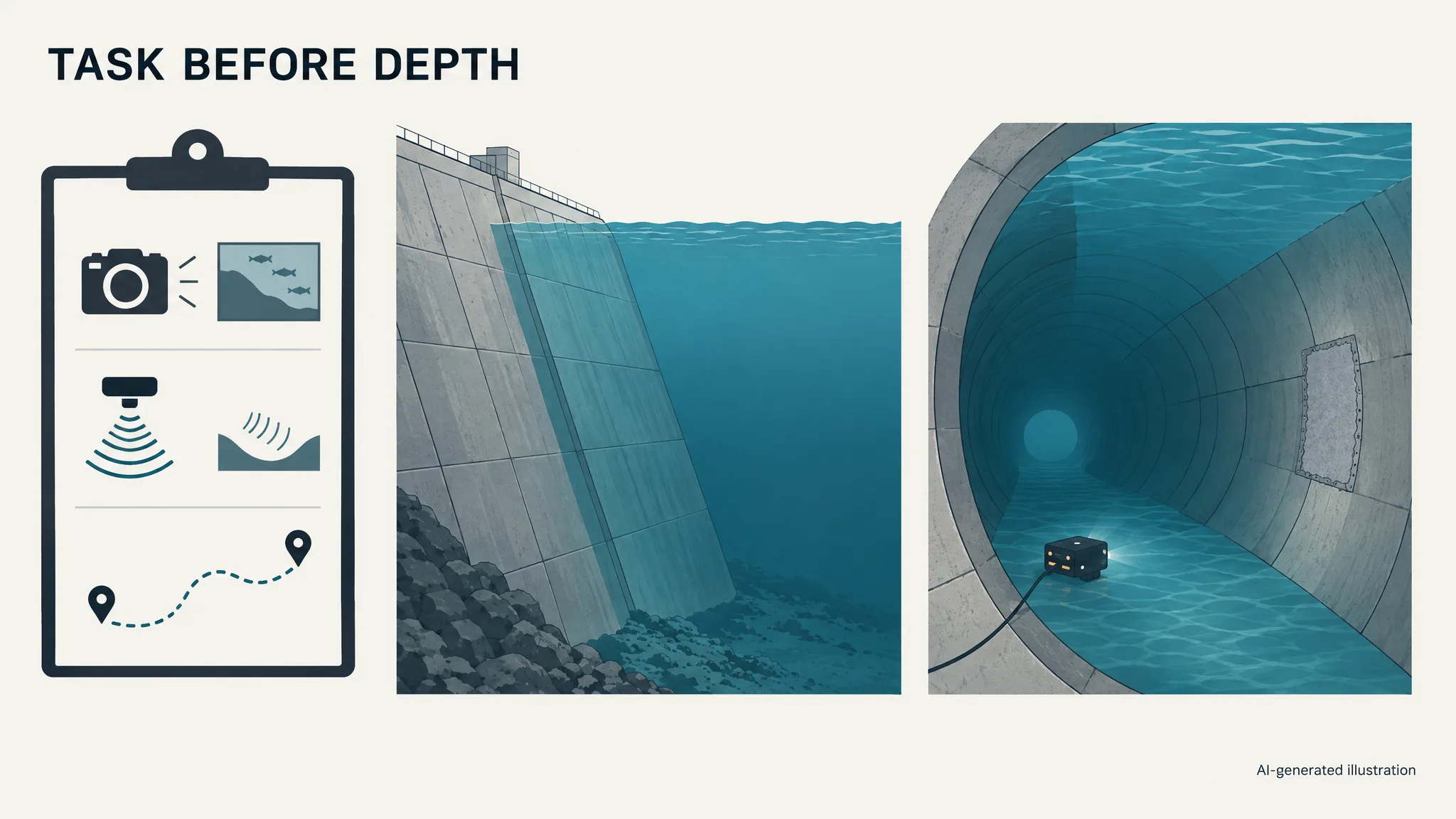
“Inspect a dam” is not yet an equipment requirement. Following a dam surface, observing a repaired area inside a tunnel and collecting sonar data about an opening place different demands on the vehicle. A shared industry label does not make those tasks interchangeable.
Choose the relationship between the vehicle, the structure and the required evidence first. Then check whether a proposed system can reach the work area, carry the instruments and operate within the site's conditions. Our existing equipment-selection checklist covers the specifications to collect; the discussion below explains how task differences change the configuration questions.
Why can two hydropower inspections need different systems?
The vehicle may need to follow a surface, observe a particular repair or collect a representation of the surrounding structure. Specify which of those jobs you need rather than requesting a generic “hydropower ROV.”
Pengpai Ocean's hydropower application materials distinguish three relevant situations. They describe an underwater crawler moving along sloped dam surfaces to inspect cracks and deformation; underwater vehicles collecting data and video at station openings; and hybrid autonomous/remotely operated vehicles observing structural repair conditions inside tunnels, with sonar used for imaging and reconstruction.
These are manufacturer-described applications, not inspection projects performed by us. Their value for selection is the distinction between the tasks:
| Manufacturer-described task | What your requirement should resolve | What to ask about the proposed system |
|---|---|---|
| Following a sloped dam surface to inspect cracks or deformation | The surface to be covered and the observations the reviewer needs | Whether the proposed vehicle's movement and observation arrangement suit that surface |
| Collecting data and video at intakes, discharge openings and stilling pools | Which opening, which areas and which records are required | Access, water conditions, instrument coverage and the tether route |
| Observing repaired structural surfaces inside a tunnel, with sonar imaging or reconstruction | Whether the deliverable is repair-area video, sonar output, reconstruction or a defined combination | The viewing and sonar equipment, navigation, recording and processing scope |
A camera view of a repaired surface and a sonar reconstruction are different deliverables. Ask the person who will assess the inspection what they need to receive. If both are required, include both in the configuration discussion rather than treating “camera and sonar available” as the finished answer.
Do not turn an application description into a suitability guarantee. A crawler described for sloped dam surfaces is not automatically suitable for every slope, material or obstruction. Equally, a hybrid vehicle's autonomous mode is not a reason to assume autonomous tunnel inspection is included. The proposed movement, control mode and site conditions still need review.
Pengpai also identifies difficulty comparing data across inspection periods as a hydropower challenge. That makes the record a purchasing question: if your team must compare a repair with a later inspection, ask how the same area will be identified in the recordings and what information will accompany it. A live view alone does not specify that handoff.
Which operating conditions can rule out a configuration?
Check working depth, current, visibility and access separately. Passing one does not compensate for failing another.
Working depth and cable route: Identify the depth of the target and the route from the launch point to it. Tether length is a separate constraint, not a depth rating or a guaranteed horizontal radius. Describe corners, structures and other obstacles rather than giving only the straight-line distance.
Current and the required observation: Tell the manufacturer what the vehicle must do while exposed to the flow. Travelling through an area is not the same requirement as maintaining a useful viewing position beside a structure. Vehicle speed should not be used as a current-resistance rating.
Visibility and the requested evidence: State the known water conditions and the detail your reviewer needs to examine. Camera resolution alone cannot establish whether that detail will be visible at the site. Ask what evidence the proposed camera, lighting and sonar arrangement can provide under comparable conditions.
Access and recovery: Describe the shore or vessel location, restricted openings and available handling facilities. Include the configured equipment, not just the bare vehicle, when reviewing access.
Have the manufacturer and your site's qualified technical personnel review the proposed operating limits, power, cable handling and launch/recovery arrangements. The purpose here is to define equipment requirements, not operating settings.
Do you need video, sonar, measurements—or all three?
Choose instruments against the deliverable, not against a list of optional accessories. “We need to see the structure” is too broad if the final reviewer expects a particular measurement or processed data set.
For a visual record, specify the surfaces to be observed, the required viewpoints and how the recordings should be associated with locations. Ask to see representative output from the proposed camera and lighting configuration.
For sonar work, distinguish navigation support from the inspection output. In Pengpai's tunnel application description, sonar imaging and reconstruction concern the structure itself. That is a more specific requirement than simply adding a forward-looking sonar so an operator can view the surroundings. Ask which sonar, acquisition software and processing are proposed for the requested result.
For measurements, name the instrument and required output. Neither video nor sonar availability, by itself, specifies a measurement method, accuracy or acceptance criterion. Those belong in the agreed technical requirement.
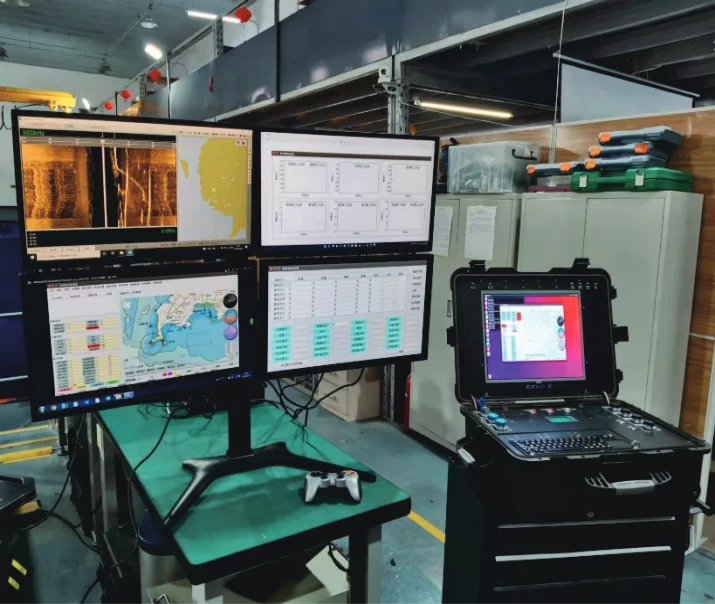
Keep display, recording and export as separate questions. Ask which video, sonar data, location information and annotations can be retained, which formats are supplied, and which processing is included. A screen image does not define an exportable inspection package.
When does observation become a tool-assisted task?
Treat physical interaction as a separate requirement. Seeing an object, collecting a sample and cutting material are different jobs, even when the same vehicle family offers tools for them.
Pengpai's PX-050ROV observation and tool platform illustrates why two weight figures need separate attention: the manufacturer specifies a 50 kg vehicle and a 15 kg payload. The first matters to the handling discussion; the second is an input to the instrument and tool configuration. Neither figure establishes that a particular manipulator can perform the requested action.
Provide the tool model, dimensions, mass, mounting, electrical demand and control/data interfaces. Define the action it must perform and ask for the proposed integration to be identified in the quotation. An expandable-equipment list is not a compatibility test or a standard delivery list.
Keep cleaning distinct from inspection, too. Our discussion of net-condition evidence versus cleaning records explains why cameras on a cleaning system do not automatically satisfy a separate inspection requirement. Specify the observation and physical work independently, then discuss whether one configuration can serve both.
What belongs in the system besides the underwater vehicle?
Include the power, tether handling, controls, recording equipment and deployment provision. Compare complete arrangements rather than a vehicle-only price against a fully equipped package.
Pengpai describes ship- or shore-powered inspection systems with an umbilical, deck controls, an electric winch and a guide arrangement. Cable power is a system choice; it is not a promise of unlimited continuous operation.
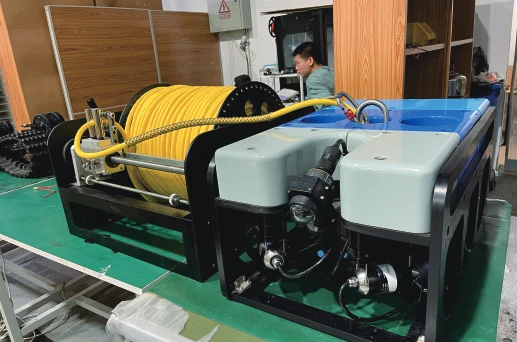
Ask the quotation to distinguish equipment supplied with the system from facilities your site must provide. That includes the power source, surface controls, tether and reel, deployment equipment, instruments, software and data-processing scope. Pictured accessories are not the equipment schedule.
A battery-powered configuration needs its own discussion of task duration, charging and the selected instrument load. Do not compare a maximum battery-life figure with an undefined cable-powered mission duration as though they describe the same test.
Once those requirements are clear, use our tethered and hybrid platform range to identify candidates for review. The shortlist should follow the task and site constraints, not replace them.
What should you send before requesting a quotation?
Send a brief that lets the manufacturer evaluate the task, the evidence and the complete deployment arrangement together. We suggest the following order:
- Asset and task: Identify the structure and areas to inspect. Separate observation, measurement and any tool-assisted action.
- Required record: State the video, photographs, sonar data, reconstruction, measurements and location references your reviewer expects. Include any need to compare inspection periods.
- Operating environment: Give the country, working depth, known current and visibility, obstructions, restricted openings and proposed cable route.
- Instruments and tools: Identify selected models, interfaces and the functions required. Ask for any proposed alternatives to be stated explicitly.
- Surface facilities: Describe shore or vessel access, available power, handling facilities and proposed launch/recovery provision.
- Supply and evidence: Request the itemized equipment scope, representative output, relevant test conditions and applicable product documentation. Confirm training, maintenance, delivery, warranty and support terms in writing rather than assuming them.
We coordinate selection and quotations with manufacturing partners; we do not provide the inspection service or determine the structural condition of your asset. Use our project equipment inquiry to send the brief. Begin with the record your team needs to assess—and the conditions under which it must be collected—so the discussion starts with a mission requirement rather than a depth number.
Filed under ROVs
Back to Blog