Marine robotics / Definition
Single-beam echo sounder
SBES · Single-beam sonar
A single-beam echo sounder measures bottom depth within one acoustic beam, producing a sequence of soundings along the survey vessel's track.
At a glance
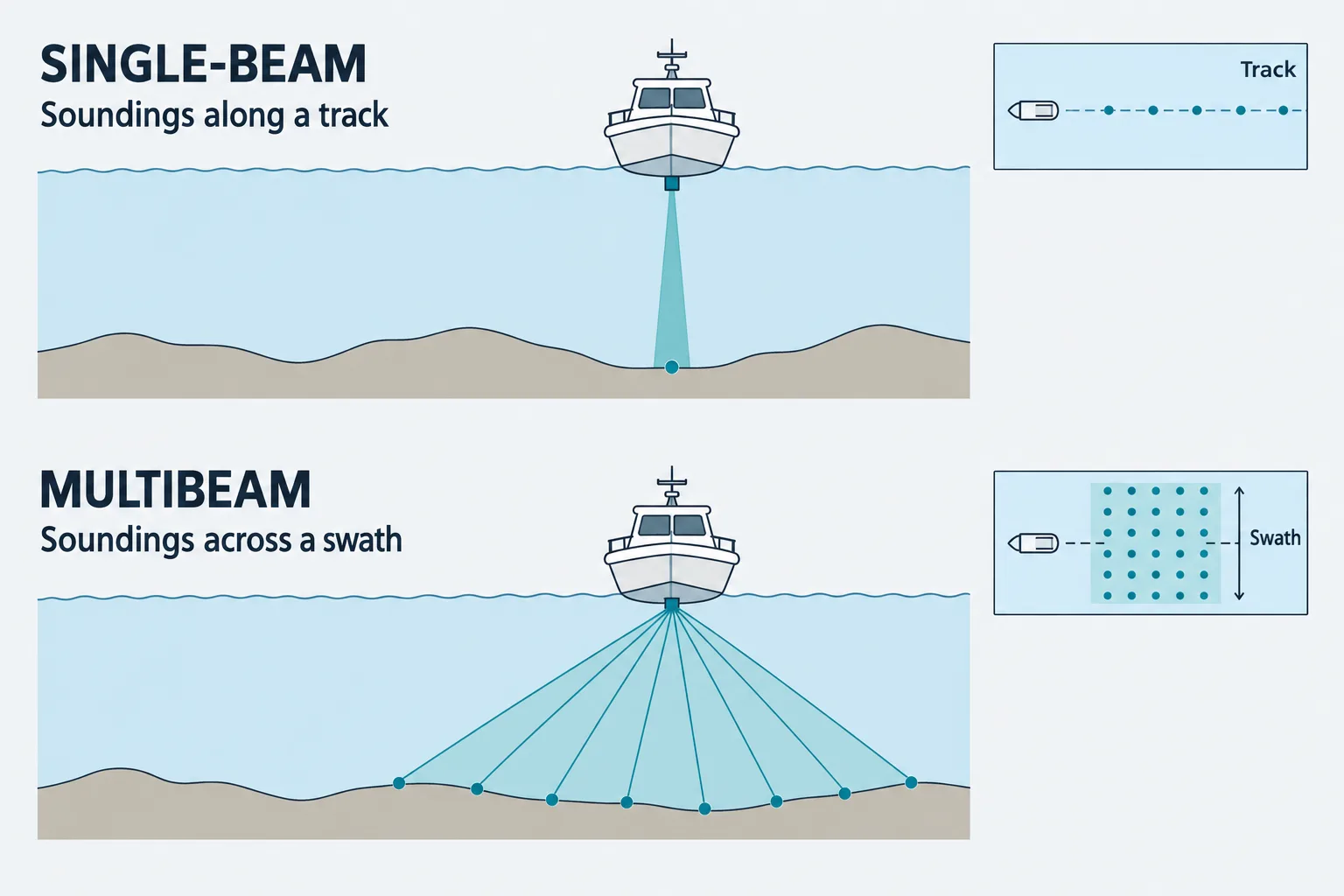
The upper panel shows one downward beam and successive soundings along the track. The lower panel shows multiple beams across a swath. Inset dots illustrate coverage patterns, not guaranteed spacing or complete bottom coverage. AI-generated illustration; not survey data or a product performance claim. Not to scale.
View full-size diagram (opens in a new tab)What the term means
A single-beam echo sounder sends an acoustic pulse toward the bottom and measures its return. The echo's travel time is converted into range using information about sound speed. As the vessel moves, successive soundings form a depth profile along its track.
The word single distinguishes this coverage pattern from a multibeam system's set of depth measurements across a swath. It does not mean that the instrument measures only one depth during an entire survey. For the cross-track coverage distinction, read the multibeam echo sounder explanation.
Mission context
A single-beam configuration can provide depth observations along planned lines or transects. Whether those observations are sufficient depends on what the project must deliver, including the required coverage and features to be identified. Read the bathymetry explanation for how depth profiles relate to the required mapping output.
NOAA's Pacific Islands single-beam dataset provides a concrete example: small-boat soundings were collected in nearshore areas and used to help validate satellite-derived bathymetry where multibeam observations could not be collected. That is a documented use, not evidence that single-beam is preferable for every shallow-water task.
A common confusion
Joining soundings into contours does not mean the gaps between survey lines were directly measured. The acoustic footprint, line arrangement and terrain affect what has actually been observed. A single-beam quotation should therefore be compared with the required survey output, rather than treated as a lower-priced equivalent of any multibeam system. For a project-specific equipment review, read the hydrographic survey equipment requirements covering platforms, instruments and data requirements.